The Octopus Has Notes
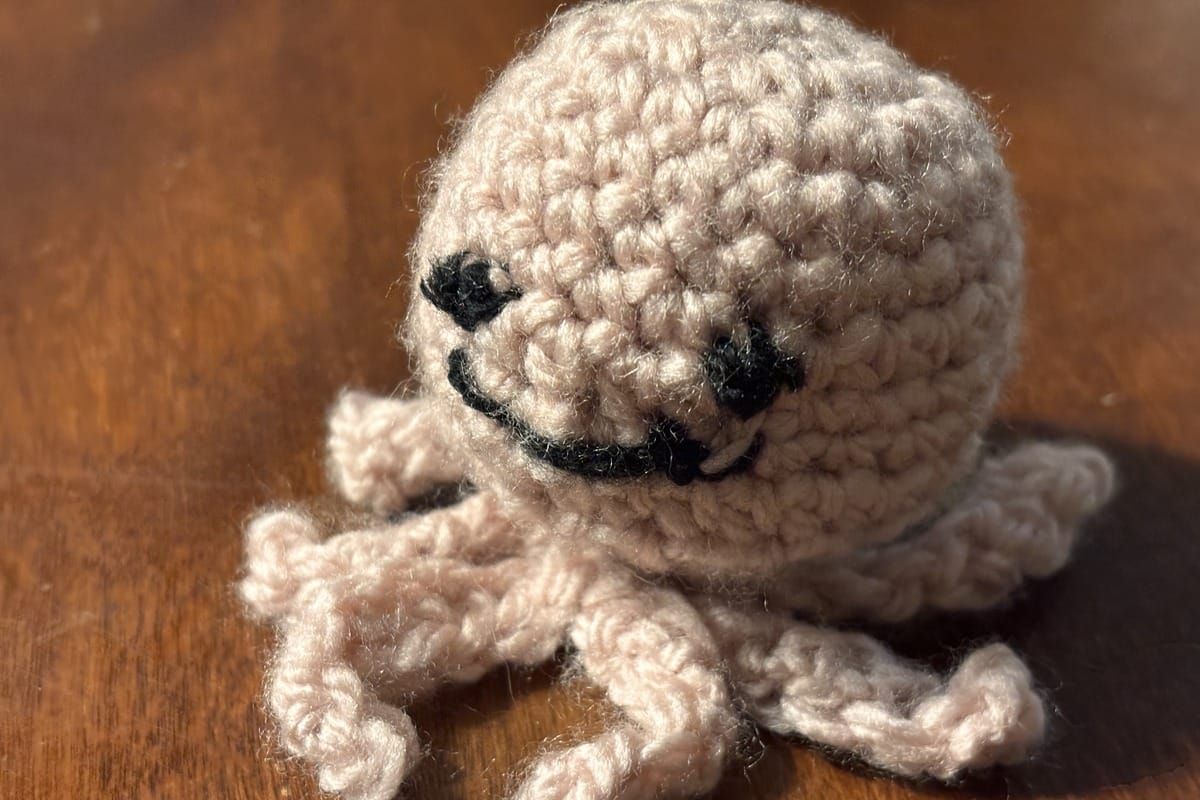
I was on the third pass of an essay about Odysseus when the octopus arrived.
Not writing it. Editing it—the slow part, where you move one paragraph up and discover the one underneath it had been doing nothing for a week and you’d been fond of it anyway.
She was wearing a tiny editor’s visor. She had a clipboard.
“Everyone is writing about Odysseus right now,” she said. “The movie is out. Every clever person on the internet is having a go. Derivative drivel.”
Then she waited, the way people wait when they believe they have said something devastating.
It was the most specific thing she has ever said to me. Usually I get everything is terrible, nobody wants this, you will look stupid. This time she had a subject, a cultural moment, and a verdict, delivered in under ten words. She sounded like an editor.
She was also half right. There are Odysseus essays everywhere at the moment. Anyone writing about that mast this month is writing into a crowd.
Half right is not a note.
A few weeks ago someone who reads my drafts gave me one that was. She told me I hadn’t landed the point about the crew—that the men who died were the collateral damage of Odysseus’s executive function, and the draft hadn’t made anyone feel it.
It didn’t sting.
That is the part I keep turning over. Someone had just told me the load-bearing paragraph of my essay wasn’t holding, and I felt no shame at all. I felt like getting back to work. So I did. I went at it until the crew were people instead of a plot mechanism, and then I handed it back to her.
She read it and said, “That’s it. You got it.”
Now hold that up next to the clipboard.
Everyone is writing about Odysseus is a fact about the internet. It is not a fact about my third paragraph. She could not tell me which sentence was borrowed, because none of them were—the rope is mine, the mast is mine, the daughter who noticed before I did is mine. She had a headline and a verdict and nothing in between. All impact, no incident.
So I have a rule now, and it takes one line.
Specific notes, please.
If she can point at a paragraph and say which one it repeats, she is editing, and I should sit down and pay attention. If she can name what the argument is missing, same. If all she has is derivative drivel, she gets a gentle mash on the head.
Except I know what the mash is.
It is not a ruling. It is me telling her to shut up, and I have found a more respectable way to do it—a test, a standard, a polite phrase with please on the end. I wrote in July that silencing her doesn’t work. Closet, chain, rocket, still audible. That is still true. All I have done is put a procedure on the shove.
She showed up in a costume. So did I.
And she has never once been wrong about the risk. Being seen can hurt. She remembers every time it did, which is the entire reason she came running when I opened a draft about something everyone else was already talking about. She means well. She is also not qualified. Meaning well is how she got the job in the first place.
The rule is still right. The one applying it needs watching.
If she cannot give specific notes, she is not an editor. She is just being an octopus.
Which is why I am shopping for a squishy one.
Last time she came carrying an eraser, a knife, and a mirror. I want the version of her that flattens out against the table.
P.S. Anyone who has sat through corporate feedback training will recognize what my reader did without being taught it: situation, behavior, impact. Here is the paragraph, here is what it is doing, here is what happens to the person reading it. The reason that model works is not that it is polite. It is that every part of it can be checked. Someone can go look at the paragraph and tell you that you are wrong. My octopus offers impact and nothing else, which is exactly why there is no arguing with her.