We All Speak Soccer Now
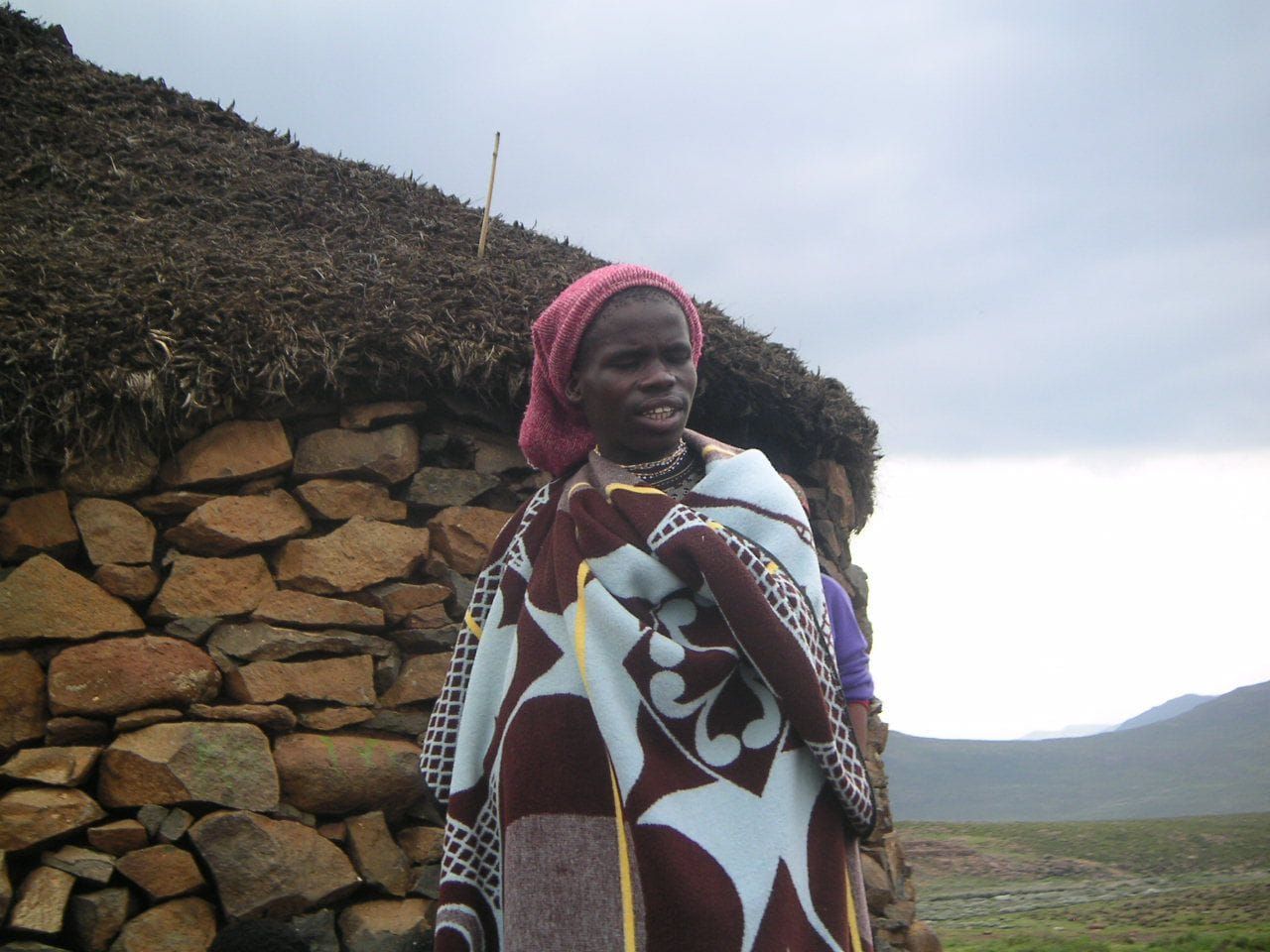
In 2005 I visited South Africa, and as part of the trip we took a jeep up the Sani Pass into Lesotho, the highest plain in sub-Saharan Africa. There I met a woman who lived in an isolated rondavel with her family, raising sheep. She offered me homemade beer from a 55-gallon drum and bread she had baked on her hearth stone. I accepted both, grateful, and as we ate she spoke to me in quiet English about her lonely life on the plain when all the men had gone to South Africa to find work, and her enduring concern for her son’s future.
It just occurred to me recently that my eldest is likely the same age her son was then.
You would think there would be so many differences between us — and there were, more than I could count. But there is one wish I have heard, over and over, in country after country, that needed no translation at all. Every single person I have ever met wishes for a better, more peace-filled world for their children. Italy. Spain. Japan. Australia. New Zealand. A woman on a mountain in Lesotho with a 55-gallon drum of beer. It is the same wish.
Our family travels together a lot. Fortunately, my brother has a gift for languages. He and my daughters speak another one you may not be as familiar with. Soccer.
My brother claims he knows how to say “pass” in about twelve different languages. I’m not entirely sure that counts as being multilingual, but it has gotten him surprisingly far.
My mother and brother were traveling in Japan, outside of Tokyo, at a time when there were very few signs at the train station in Romaji. There is a sight you will see in every rural Japanese JR station that has even the slightest chance of attracting tourists: the map held up to the ceiling while the reader tries to match the Katakana, or Hiragana, or Romaji to what they see on the map.
I wasn’t there for this event, but I’ve been told the story enough times that I almost feel like I was.
A kind Japanese woman walked up to my mother and asked if she needed help. My mother launched into an explanation of how lost they were, and asked if she knew how to get to Nara. It quickly became evident that her English didn’t go that far.
So my brother tried his Japanese on her.
Same result.
Then she asked, “Habla Español?”
And what do you know — he does.
She went and pulled her daughter out of school, gave them a guided tour of the town, and took my brother and mother to lunch. According to what I’ve been told, this was how it worked: Mom spoke English to my brother. My brother spoke Spanish to the nice lady. The nice lady spoke Japanese to her daughter. And the daughter spoke soccer to my brother.
I bet the Japanese people sitting at the table next door were wondering what exactly was going on.
I saw the power of soccer with my own eyes in 2006. We were in Peru during that year’s World Cup, visiting the Uros people, who live on floating islands made of reeds in the middle of Lake Titicaca. Their houses, their schools, their hospital, their cooking fires, and their boats are all built of those same reed mats. They had only battery-powered radios. It was remote. It was isolated, in every sense the word usually carries.
And even there, my brother could ask about the matches — who was winning, who was losing — and everyone knew. Not yesterday’s scores. Up to the minute. On a floating island of reeds in the middle of a lake, with nothing but a battery radio between them and the rest of the world, they spoke soccer fluently.
Twenty years later, I watched this year’s World Cup from my living room, my daughters and I jumping up and down, shocked and amazed, every time Vozinha — Cabo Verde’s 40-year-old goalkeeper, playing in his first World Cup — made another impossible save against Lionel Messi, who many consider the greatest soccer player of all time. We watched Messi, thirty-nine years old, dribble the ball between the legs of not one, not two, but three defenders before someone could finally bring him down. We watched eighteen-year-old Lamine Yamal play with a calm I could not have managed at twice his age. Come to think of it, I'm not sure I manage it even now.
We argued about who was better, who should have started, and which calls the referees got wrong.
But after the final whistle blew, people went back to singing together.
We got up close and personal with the fans when Atlanta hosted several World Cup matches this summer, including the last one played here — England versus Argentina, in the semifinal. I won’t tell you who I was rooting for. What I will tell you is that this is the first year I have been all the way in on the World Cup, and watching the fans in my own city streets — dancing, singing, playing — reminded me of everything I’d already heard about, from that story in Japan to what I saw myself on that lake in Peru.
When our own team was eliminated, we didn’t stop. We became honorary Vikings and cheered for Norway. We recovered a long-lost affection for a grandmother from Leeds. We remembered certain trips fondly and picked a team to match. We cheered for Cabo Verde because of their heart, for England because of their tenacity, for Argentina because their brilliance was, at times, simply astonishing to watch.
It felt like a sleepover with beloved cousins you haven’t seen in years—the kind where everyone falls right back into it, loud and overlapping.
I don’t want it to be over. I don’t want it to stop.
My eldest daughter likes to say I put her on a soccer team as soon as she could kick a ball without falling over. She’s right. She was four. Her dad practiced with her by kicking balls at her head until she lost her flinch reflex and learned how to react instead.
I didn’t grow up with this. There was no youth soccer for girls when I was growing up in the 1970s and ‘80s. About the best you could do was a tennis club, or maybe a softball game. My daughters have never known a world where this language wasn’t simply theirs, the way it was the girl’s in that train station outside Tokyo, the way it belonged to the barefoot girl I watched heading a ball on a floating island in Titicaca.
I speak soccer as a second language, not a first, the way my children and my brother do. But hey — I think I finally understand the offsides rule, thanks to someone on Instagram who explained it in terms of waiting in line to buy a dress.
Even in the middle of fierce competition and fiercer national loyalty, I saw some of the best of humanity this summer. Boy, did I need it.
For a few glorious weeks, people from all over the world arrived carrying different languages, different histories, different loyalties, and probably very different ideas about almost everything. Then somebody brought out a ball.
Suddenly, we knew the rules — except offsides, perhaps. We knew when to cheer. We knew when a save was impossible and a pass was beautiful, even when it was made by the opposition.
For a few weeks, strangers became playmates.
We traded jerseys. We learned each other’s songs. We danced together in the streets. We argued about the referees. We met one another in a language almost everyone seemed to understand.
My brother may be right.
Sometimes all you need to know is how to say “pass.”
It was not world peace.
But for a little while, it looked like practice.